
Navigating the Impact of Asylum Applications on U.S. Labor Force
By James Larsen
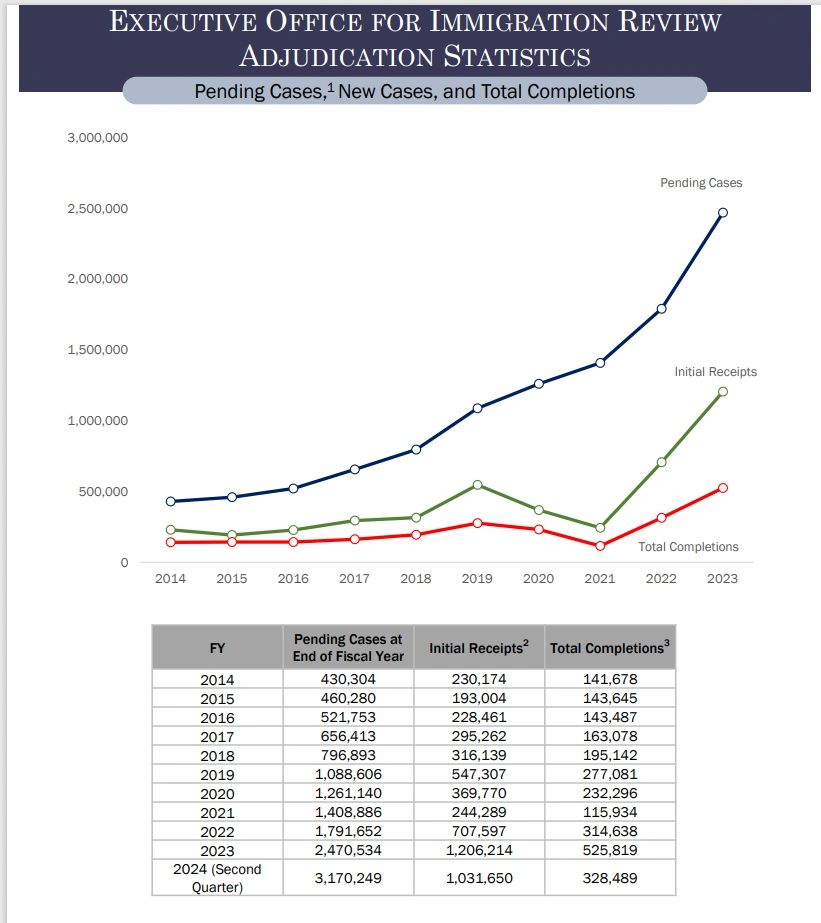
In recent years, the United States has seen a staggering increase in pending asylum applications, with numbers more than doubling to 3,170,249 by the end of 2023 compared to 2021. This unprecedented surge, as reported by the Executive Office for Immigration Review of the Department of Justice, highlights a growing humanitarian and administrative challenge. What does this mean for asylum seekers and the broader U.S. labor market?
The Backlog Conundrum
One of the most pressing issues stemming from this influx is the backlog in asylum adjudications. With over 3 million applications pending review, processing times have stretched to years in some cases. Asylum seekers awaiting their cases to be heard often find themselves in limbo, unable to fully integrate into the workforce due to uncertain legal status.
Work Authorization and Economic Participation
For many asylum applicants, the ability to legally work in the U.S. is crucial not only for their livelihood but also for the economy. Those granted asylum or awaiting a decision can apply for Employment Authorization Documents (EADs) with category code C08 after their application has been pending for 150 days. This authorization allows them to work lawfully while their asylum claims are processed. Originally intended to assist applicants facing extended delays in adjudication, it is exceedingly rare for any asylum application to be decided in less than 150 days; most take years.
Changing Dynamics in Work Authorization
Under the Biden Administration, there has been a trend toward issuing EADs with longer validity periods, reducing the frequency of renewal. In December of last year, the validity of certain asylum applicant EADs was extended to five years. While this may streamline administrative processes, it also raises questions about the impact on labor dynamics and workforce availability.
The increase in validity dates for asylum Employment Authorization Documents (EADs) from one year to five years represents a significant policy change that impacts both applicants and employers. Previously, asylum seekers had to renew their EADs annually, which not only created administrative burdens but also resulted in more frequent fee payments to USCIS. With the new five-year validity period, there is less frequent renewal needed, leading to a reduction in income for USCIS from EAD renewal fees.
To compensate for this loss in revenue, USCIS introduced an asylum program fee ranging from $300 to $600 per application for employers seeking to lawfully employ visa workers. This fee imposition raises questions about fairness, especially for employers who diligently navigate the complexities of visa sponsorship and compliance.
Implications for the Labor Force
Employers seeking to fill positions should consider the potential of hiring asylum applicants. These individuals, authorized to work under category C08, contribute skills and expertise to various sectors of the economy. It's essential for employers to understand their responsibilities under the I-9 verification process and ensure compliance with evolving regulations.
Compliance and Legal Considerations
Under the Immigration and Nationality Act, employers are required to verify the identity and work authorization of all employees hired in the United States. Asylum applicants with EADs must undergo this verification using Form I-9, ensuring they are legally authorized to work until the expiration date of their EAD, and beyond if they timely file an application for extension.
Potential Disparate Treatment of Spouses of U.S. Citizens?
One often overlooked aspect of our immigration system is the disparity in work authorization eligibility between different categories of immigrants. For instance, undocumented immigrant spouses of U.S. citizens cannot apply for work authorization unless they are eligible for adjustment of status, leaving many in limbo regarding their employment rights. This disparity raises concerns about equity and fairness within the immigration system, particularly in terms of access to work authorization and economic opportunities.
Addressing these issues requires a balanced approach that considers both the operational needs of USCIS and the equitable treatment of immigrants and their families. Advocates for immigration reform often highlight the need for policies that promote economic integration and fairness, ensuring that all individuals have a reasonable opportunity to contribute to society through lawful employment.
Looking Ahead
As the landscape of immigration policy and asylum processing continues to evolve, employers and policymakers alike must adapt to these changes. The increasing issuance of longer-term EADs could influence workforce stability and planning, offering both opportunities and challenges for businesses across sectors.
In conclusion, while the rise in asylum applications presents logistical and humanitarian challenges, it also underscores the potential of asylum seekers to contribute positively to the U.S. economy. As policymakers grapple with backlog reduction strategies and employers navigate compliance and hiring decisions, the role of asylum applicants in the labor force remains a critical consideration for the future.
James Larsen is the Managing Attorney with fifteen years of experience in immigration law, including practice before the U.S. Department of Justice's Executive Office for Immigration Review and its Immigrant and Employee Rights Section (formerly the Office of Special Counsel for Immigration-Related Unfair Employment Practices).
Immigration law changes rapidly. This article is for informational purposes only, reflects the law as of its publication date, and may be superseded by later changes in the law, regulations or agency policy. It is not legal advice, and reading it does not create an attorney-client relationship.La ley de inmigración cambia rápidamente. Este artículo es solo para fines informativos, refleja la ley a la fecha de su publicación y puede quedar superado por cambios posteriores en la ley, las regulaciones o las políticas de las agencias. No es asesoría legal, y leerlo no crea una relación abogado-cliente.